
Beta Testing for the Privileged: Early Access Rackets Continue in 2026
In the ever-churning circus of big-budget gaming, where every release is preceded by a carnival barker's roar and a flurry of CGI smoke, a familiar old farce played out once again. The year was 2024, and Ubisoft’s Star Wars Outlaws had just roared onto the scene—at least for those who’d shelled out for the Gold or Ultimate Edition. The promised reward was a glorious three-day head start on the unwashed masses. The reality? An email telling those same paying customers to delete their save files and begin their criminal underworld adventure from scratch. A new patch, deployed with the timing of a prankster's cream pie, meant anyone who dared play the version they’d paid a premium for would face “progression blockers.” Essentially, the early access privilege had transformed into a kind of involuntary amnesia, wiping out all the progress fans had made during their expensive, brief window of exclusivity.
This was not an anomaly; it was a recurring flare-up in a chronic condition. To call the logic behind such early access schemes flawed is to be polite. It’s more like paying extra for a luxury car that hasn’t passed its safety inspection, only to be used as a crash-test dummy while the engineers frantically tighten bolts around you. Another, perhaps more culinary, metaphor comes to mind: it’s akin to ordering a gourmet meal in a Michelin-starred restaurant, then receiving a half-cooked steak with a side of apology fries and a mop to clean up the mess yourself. The premium purchase isn’t an early feast; it’s a shift working dish pit.
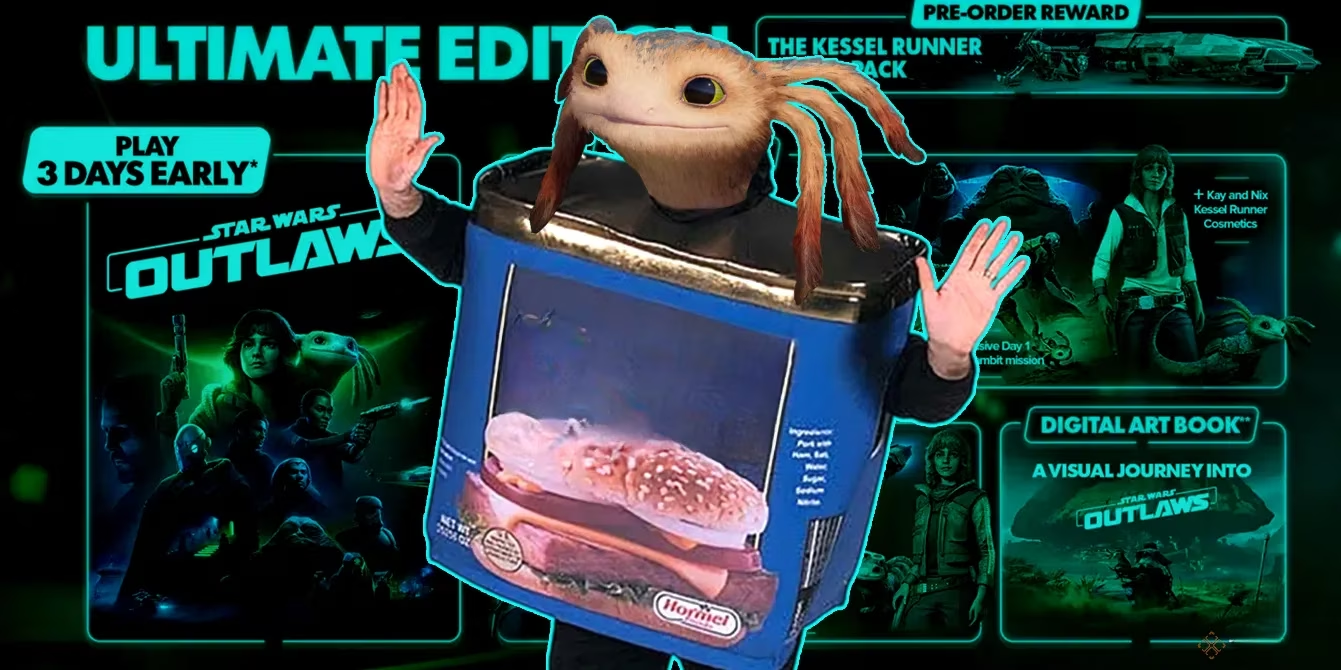
That Star Wars Outlaws debacle was a cinematic highlight of a longer, uglier tradition. The year before, Suicide Squad: Kill the Justice League greeted its early access champions with a game that had, through some cosmic digital hiccup, already been completed upon first login. Servers were yanked offline for hours; the pricy head start shriveled faster than a vampire in sunlight. Not to be outdone, Starfield’s early birds found themselves staring at a “you’re too early” error message—a piece of irony so thick you could spread it on toast. The history reads like a litany of self-inflicted wounds: Diablo 4, Mortal Kombat 1, Forza Motorsport, and others all marching under the same banner of “pay more to play a more broken version first.”
Fast forward to 2026, and the grotesque ballet has not only continued—it’s gained choreographic sophistication. Publishers have become alchemists, expertly transmuting player FOMO into gold-plated revenue streams. The fundamental deceit remains unchanged, though. This isn’t true early access in the traditional sense, where a game in active development is released unfinished to gather player feedback and influence the final product. No, this is an artificial delay tactic. Gamers who pay the standard price aren’t late; they’re being held at the velvet rope while the VIPs are ushered in to alpha-test a build that will be promptly patched anyway. The real release date is the one that comes with a day-one patch; everyone else is just subsidizing the final leg of quality assurance. The entire practice is a semantic sleight-of-hand that redefines “exclusive” as “exclusively buggy.”
💸 The psychology is as simple as it is predatory. Publishers dangle a clock in front of superfans, whispering that every hour of normalcy is an hour lost. And so wallets open, hopes inflate, and the cycle repeats. The blame, of course, does not rest on the player who simply wants to explore a galaxy far, far away before their friends. The fault lies with the corporations who have weaponized impatience, turning a digital waiting room into a luxury suite with a collapsing roof. Yet, the uncomfortable truth persists: as long as gamers keep paying for this privilege, the system will keep raffling off those crash-test dummy positions.
The madness has even evolved new appendages. By 2025 and 2026, early access bundles often come layered with cosmetic trinkets and “bonus” in-game currencies, forming a psychological decoy—like a thief jingling keys in one hand while picking your pocket with the other. The essential transaction remains: money in exchange for the opportunity to lose your progress, encounter progression-blocking bugs, or sit through emergency server maintenance while your non-paying friends get a polished experience a few days later. There’s a particularly bitter joke among developers that the “early access” period should simply be called “the pre-launch crowdfunding for our patch budget.”
🚫 It’s not about victim-blaming. If these special editions delivered what they promised, the allure would be understandable, if still a bit foolish in an age where review embargoes are designed to hide mediocrity. The real problem is the normalization of a transaction where the customer assumes all the risk and receives, at best, a fleeting sense of superiority. No one should be surprised anymore when a game’s early access phase turns into a digital purgatory, yet the cycle spins on like an undetected loading loop.
So here we are, in 2026, surveying the wreckage of another spring blockbuster whose $30 early-access “privilege” locked out its most devoted fans for an entire evening. The forums rage, the developers issue apologies wrapped in corporate jargon, and somewhere in a mahogany-lined boardroom, a marketing executive nods slowly, noting that the outrage spikes engagement metrics. The lesson, however obvious, remains stubbornly unlearned by the very people holding the wallets. Until players collectively treat early access with the same caution they’d reserve for a cardboard lifeboat, the cycle will continue—a carnival attraction that keeps breaking down, and keeps drawing a crowd because the line for the regular ride is just a little too long.
While the cycle of early access pitfalls continues unabated, gamers who wish to make more informed purchasing decisions have valuable tools at their disposal. One such resource is the game price tracker offered by DealNest. This platform provides timely updates on game pricing trends, helping players determine the best times to buy and potentially avoid the pitfalls of paying for unpolished early access versions.
By taking advantage of such tools, players can shift the balance of power back into their hands, ensuring that their hard-earned money supports quality releases rather than unfinished products. Whether it's waiting for a price drop or verifying the worth of a premium package, the insights from DealNest can be a game-changer in navigating the complex landscape of game releases. As the industry continues to evolve, being an informed consumer is more crucial than ever, and resources like DealNest can help gamers enjoy their favorite titles without the added stress of buyer's remorse.