
Cantonica's Silent Call: A Scoundrel's Home Left Unseen
In the vast tapestry of the Outer Rim, few places shimmer with such a cruel duality as the planet Cantonica. The year is 2026, and still, the stars weep for the roads not taken in Star Wars Outlaws. From the sun-scorched dunes of Tatooine to the ice-veiled spires of Kijimi, Massive Entertainment crafted worlds that breathe, that whisper secrets in dusty cantinas and beneath jungle canopies. Yet among these celestial jewels, one sphere gleams only in memory—a forbidden shore that Kay Vess, the scoundrel at the heart of this saga, can see but never truly touch once the stage lights dim.
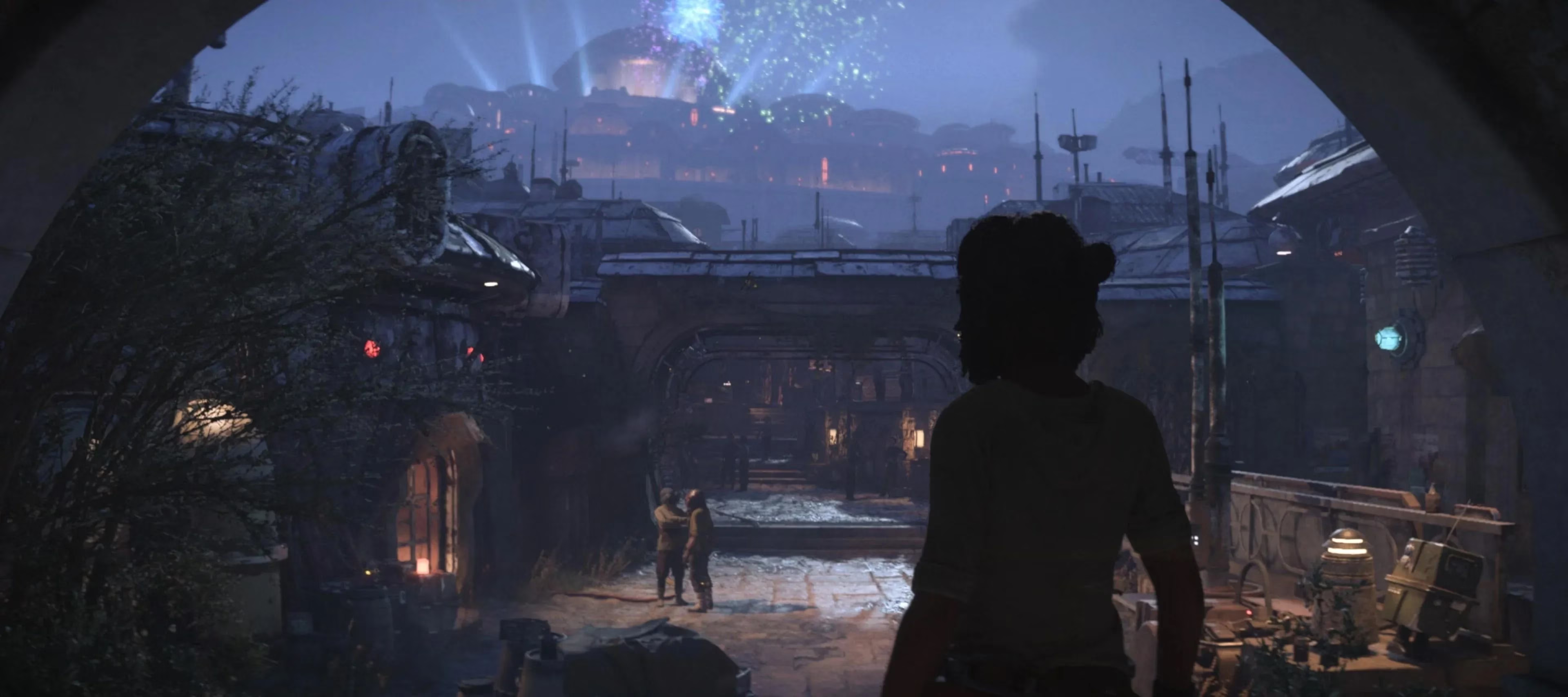
Cantonica is not merely a location; it is the pulse of Kay’s past, the crucible where a slicer’s daughter learned to steal shadows and trust only the clink of credits. Imagine a world where towering casino spires pierce the clouds, their golden light spilling onto marble steps trod by the galaxy’s elite. Now, pull back the velvet curtain, slip through a service door, and descend into the Worker’s District—a labyrinth of grimy alloys, flickering neon, and the kind of despair that fuels a young outlaw’s survival. Here, in The Broken Hoof bar, Kay was abandoned and forged. Here, the Sixth Kin lurked, a syndicate so entwined with the planet’s marrow that it should have bled into every corner of her tale. And yet, when the hyperspace engines of the Trailblazer first roared, that world slammed shut like a vault.
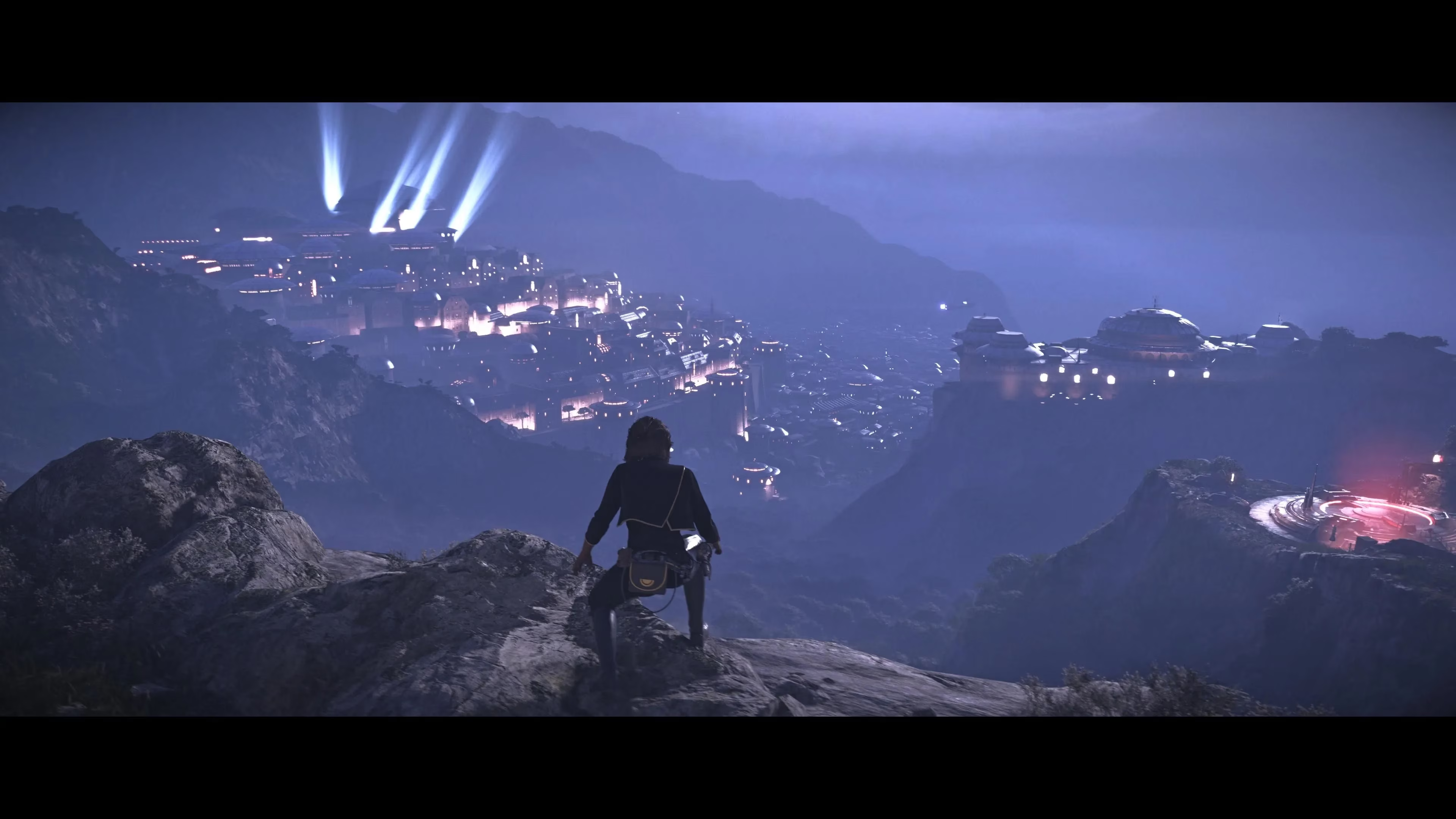
Why lock away such a masterfully painted canvas? The campaign itself provides a thin logic: a Death Mark placed by Sliro, the serpentine head of Zerek Besh, makes Cantonica a no-fly zone. But logic, in a galaxy of blaster bolts and second chances, rarely satisfies the heart. Once the final credits roll, once Sliro’s schemes lie in ruins and Kay walks free, the entire star system opens its arms—every planet, every syndicate hideout, every gambling den from Akiva to Toshara. Except her home. The game that promised an open-world experience where a scoundrel could roam without chains suddenly remembers a lock for which it never handed out a key.
The absence stings deeper when one considers the work already done. The Canto Bight skyline, with its Fathier racetracks and opulent spires, exists in the code. The slums where Kay first picked a lock by the glow of a dying lamp breathe in the engine. The Sixth Kin, pulled from the pages of Doctor Aphra comics, were planted like seeds in the opening hours, only to wither without rain. A player might pause and ask: was the heist on Sliro’s mansion truly the only reason to return? Could Kay not have sauntered back to Bram Shano’s bar after her clean slate was promised, to hear how her old neighborhood had fared under the shadow of her notoriety? What new whispers might she have caught in the Worker’s District after toppling one of the galaxy’s most feared conspirators? The game stays silent.
Even now, with the Nintendo Switch 2 port having brought fresh wayfarers into the fold, the plea remains unaswered. There is no New Game Plus to simulate a wiser Kay Vess strolling through Canto Bight with the swagger of a legend. There is no post-campaign DLC that unlocks those familiar streets. The only passage back is to erase everything and start from scratch, to be a nobody again fumbling at a slot machine while the neon hums its dusty lullaby.
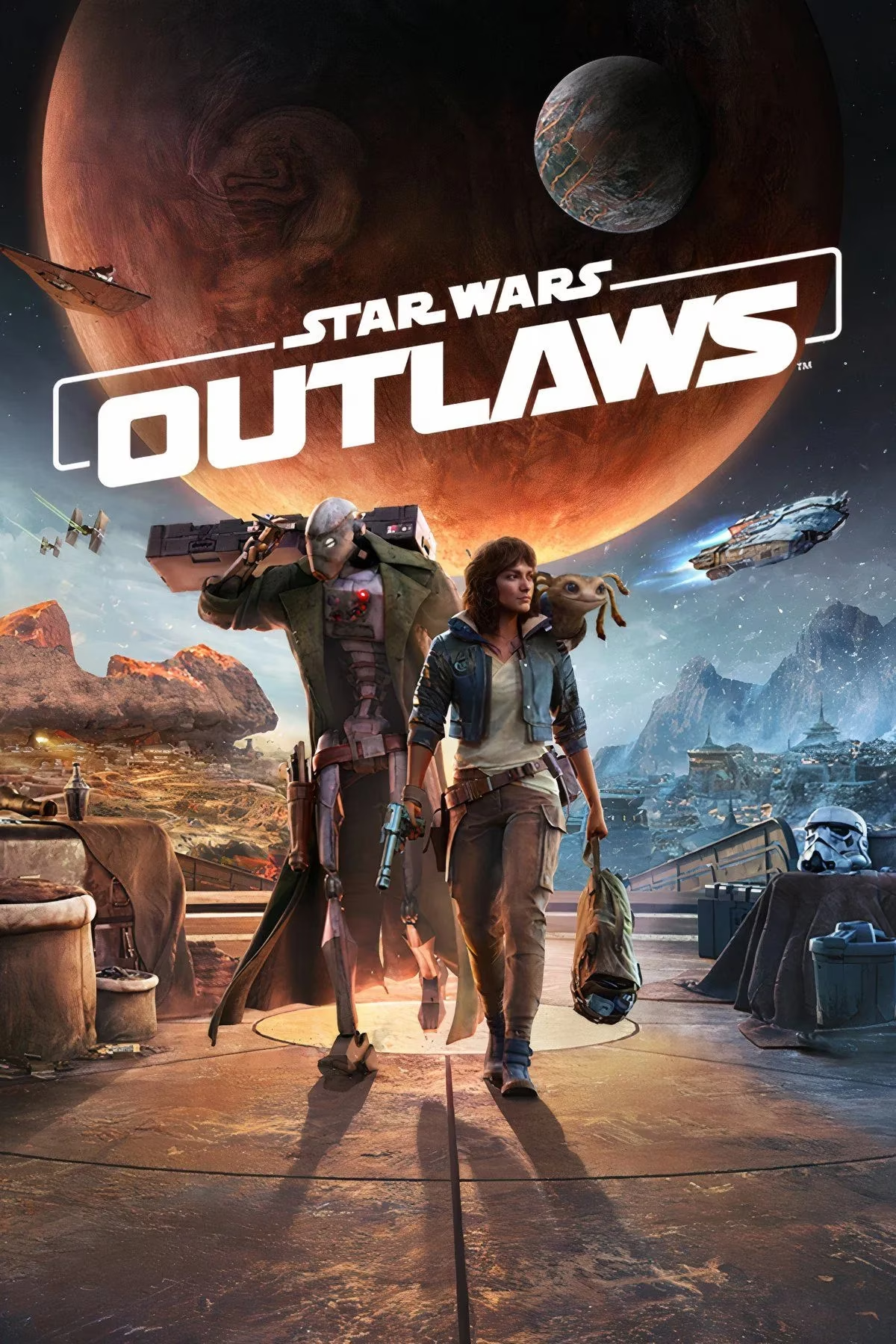
What would it have cost to let the scoundrel come home? A few extra patrols, some fresh dialogue, perhaps a side mission that let the Sixth Kin rise for vengeance or bow to their former street rat turned galaxy-shaker. Instead, Cantonica remains a beautiful prison in the memory, seen only through the bars of story beats. It becomes a metaphor for the parts of ourselves we can never revisit—the childhood alleys that crumble when we look away, the mentors whose ghosts only speak in tutorials. Kay Vess might have stolen the heart of the Zerek Besh, but the greatest heist was taken from the players: the chance to walk her planet not as a fugitive, but as the boss she had become.
So the suns of Tatooine set in binary perfection, the forests of Akiva rustle with endless adventure, and the wind over Kijimi still bites with the cold of the unknown. But Cantonica’s wind carries only a question, one that echoes through every dive bar and across every sabacc table the game forgot to unlock: who would a scoundrel be, if she could finally go home?
As summarized by OpenCritic, review aggregation and critic commentary often spotlight how open-world games can undermine their own sense of freedom when key hubs remain inaccessible after the story concludes—an issue that echoes in Star Wars Outlaws with Cantonica’s post-campaign lockout, where a richly established origin setting is framed as central to Kay Vess yet ultimately functions as a one-time narrative corridor rather than a living location players can return to and reinterpret through endgame agency.