
Navigating Syndicate Alliances and Reputation in Star Wars Outlaws
As I first set foot on the dusty, neon-lit streets of Mirogana on Toshara in 2026, the weight of the galaxy's criminal underworld settled on my shoulders like a cloak woven from shadows and whispered threats. Kay Vess, my avatar in this sprawling adventure, was no stranger to danger—our brush with Zerek Besh in Canto Bight had seen to that—but here, among the competing influences of the Pykes, Crimson Dawn, Hutts, and Ashiga, every alley felt like a tightrope strung over a nest of vipers. Sliro Barsha's gang lingered at the periphery, a ghost in the machine that I could observe but never truly join, making their presence feel like a distant storm cloud rather than an immediate deluge. This delicate dance of loyalty and betrayal forms the pulsating heart of Star Wars Outlaws, a game where my reputation is a currency more volatile than credits, yet one that frustratingly rarely buys passage into the story's inner sanctum.
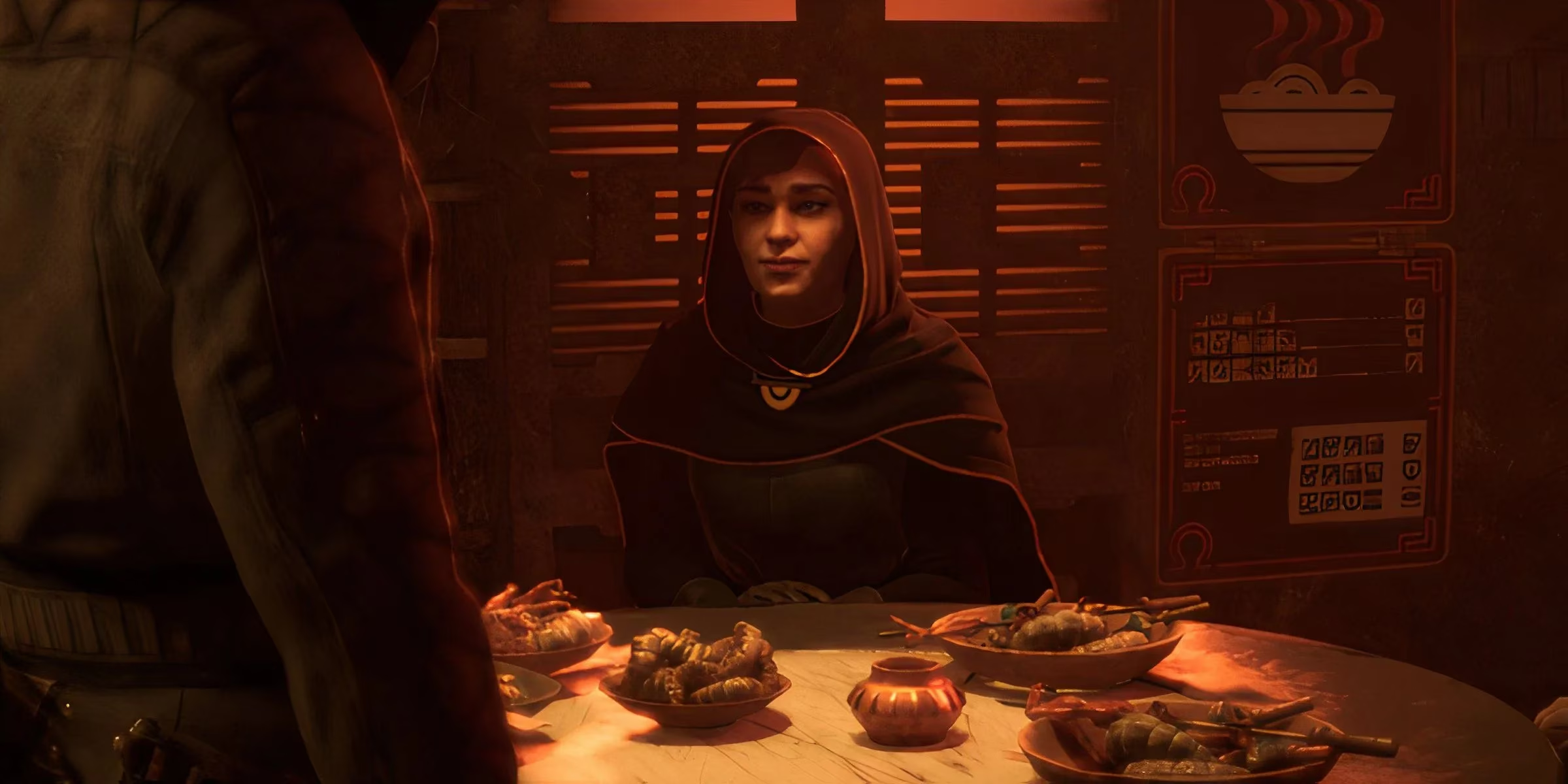
The reputation system in Star Wars Outlaws is a paradox—a brilliantly intricate gameplay mechanism that governs my daily survival, yet one that feels surgically detached from the main narrative spine. Cultivating a Good standing with a syndicate is like being granted a backstage pass to a brutal, exclusive concert; it unlocks the velvet rope to their districts and hideouts. I remember strolling into the Crimson Dawn's Mirogana sector through a bustling kitchen entrance in the Market District, the faction's insignia flashing on my screen like a digital badge of honor. Inside, I could browse exclusive wares and trade data with merchants who wouldn't give me the time of day otherwise. This access alone makes maintaining at least a neutral-to-positive rapport with each major faction feel essential. It's a practical necessity, a key that turns in the lock of everyday galactic commerce.
However, this access is tantalizingly superficial. The truly valuable treasures—the vaults, the secure landing pads, the heart of their operations—remain behind an impenetrable second layer of security, restricted areas that no amount of goodwill can unlock. My reputation with a faction became like a beautifully decorated invitation to a grand mansion, only to find all the interesting rooms permanently locked. A high-risk contract on Mirogana perfectly illustrated this divide. I was tasked with planting a surveillance spike deep within the Crimson Dawn district. With a Good status, I could waltz right up to the general access zone. But to reach the optimal placement spot near the vault? That required a masterful, undetected infiltration through a restricted zone, a challenge identical whether the syndicate saw me as a friend or a foe. The reputation system only solved half the puzzle; the rest demanded the stealth of a shadow or the force of a typhoon.
This creates the game's most compelling, and sometimes frustrating, strategic layer. Missions often present me with a moral and practical crossroads:
-
Honor the original deal with the contracting faction.
-
Accept a counter-offer from a rival syndicate or independent operator, usually for double the credits 💰.
Weighing these options forces me to constantly audit my standing across the galactic cartel landscape. Betraying the Pykes for a hefty payout from the Hutts might fund a new ship module, but it could also slam shut their territories to me, cutting off vital trade routes. These decisions create tiny, personalized story ripples, especially with the companions I've recruited across Toshara, Kijimi, Akiva, and Tatooine. Yet, these ripples never swell into narrative waves. They remain isolated pockets of consequence, like raindrops failing to fill a canyon, never significantly altering the course of the main heist plot involving Zerek Besh. The syndicates, for all their atmospheric presence, feel like spectacular stage dressing rather than actors in the central drama.
The Galactic Empire looms over everything, a monolithic threat that operates on a different, more immediate axis. While syndicate displeasure closes doors, Imperial Wanted levels bring down the hammer, triggering relentless patrols and escalating firefights. It's a missed opportunity, I feel, that I cannot align with the Empire in any meaningful, syndicate-like capacity. Their resources could have been a fascinating, morally gray tool for Kay's ambitions. Instead, my interaction with them is purely antagonistic, making their heavily fortified bases excellent training grounds for the stealth or combat prowess needed to breach any faction's inner sanctum.
| Aspect of Reputation | Gameplay Benefit | Narrative Impact |
|---|---|---|
| Good Standing | Access to public districts & merchants. | Minimal to none on main story. |
| Restricted Areas | Always off-limits; require infiltration. | No special access or dialogue. |
| Mission Choices | Alters credit rewards & faction standing. | Creates minor, isolated story beats. |
| Final Game Sequence | Highest-rep syndicate aids in ship combat. | Singular major story tether; feels abrupt. |
Ultimately, the pursuit of true power—those vault keycards and restricted-area loot—funnels my playstyle into a specific niche. It asks me to become a ghost in the machine or a sledgehammer to its gates, largely bypassing the very reputation system the game so carefully built. The dialogue exploits and nuanced relationships I hoped for remain largely untapped. There is one glorious, shining exception: in the game's final, chaotic ship combat sequence, the syndicate with whom I share the highest reputation will swoop in to aid me alongside the Rebel fleet. It's a cinematic and satisfying payoff, a moment where my galactic networking pays a dramatic dividend. Yet, it also feels like an afterthought, a narrative bolt-on for a system that spent dozens of hours operating in a parallel universe to the main plot. My reputation in Star Wars Outlaws is a key that fits many locks in the open world, but never the one on the story's most important door.