
Star Wars' New Generation: Kay Vess vs. Cal Kestis - A Tale of Two Protagonists
The galaxy far, far away has always been defined by its heroes. For decades, audiences have followed the journeys of characters who shape the very fabric of the universe, from the farm boy who became a Jedi Master to the princess who led a rebellion. By 2026, the Star Wars narrative tapestry has grown richer and more diverse, particularly within the realm of interactive storytelling. Two modern video game protagonists stand at the forefront of this evolution, offering wildly different perspectives on life in a galaxy under Imperial rule. On one side is Cal Kestis, the stoic Jedi survivor burdened by legacy and duty. On the other is Kay Vess, the sharp-witted scoundrel navigating the underworld's shadows with one goal: survival. Their contrasting paths illuminate the expansive possibilities of Star Wars storytelling beyond the traditional hero's journey.
The Jedi's Burden: Cal Kestis's Path
Cal Kestis entered the Star Wars canon carrying the weight of a fallen order on his shoulders. Introduced in Star Wars Jedi: Fallen Order, his story begins in the aftermath of tragedy—a Padawan who narrowly escaped the execution of Order 66. His initial refuge on the industrial planet of Bracca was shattered when the Empire's relentless pursuit forced him into the open. With the help of the Mantis crew, Cal embarked on a quest that was never just about his own survival; it was about preserving the very soul of the Jedi Order.
Across two critically acclaimed games, players witnessed Cal's evolution through several key stages:
-
The Fugitive Phase: Hiding his Force sensitivity, working as a scrapper on Bracca
-
The Reluctant Hero: Reconnecting with the Force and beginning to fight back
-
The Rebel Architect: Actively working to undermine the Empire and protect Force-sensitive children
-
The Pathfinder: Discovering Tanalorr and envisioning a sanctuary for the Jedi's future
His personality—marked by resilience, introspection, and a deep sense of responsibility—stands in stark contrast to the flamboyant confidence of classic Star Wars rogues. By the conclusion of Star Wars Jedi: Survivor, Cal has positioned himself not merely as a survivor but as a potential cornerstone for the Jedi Order's rebirth. His journey is inherently epic, woven into the galaxy's grand mythological tapestry, with stakes that reach far beyond his personal circumstances.
The Scoundrel's Code: Kay Vess's Reality
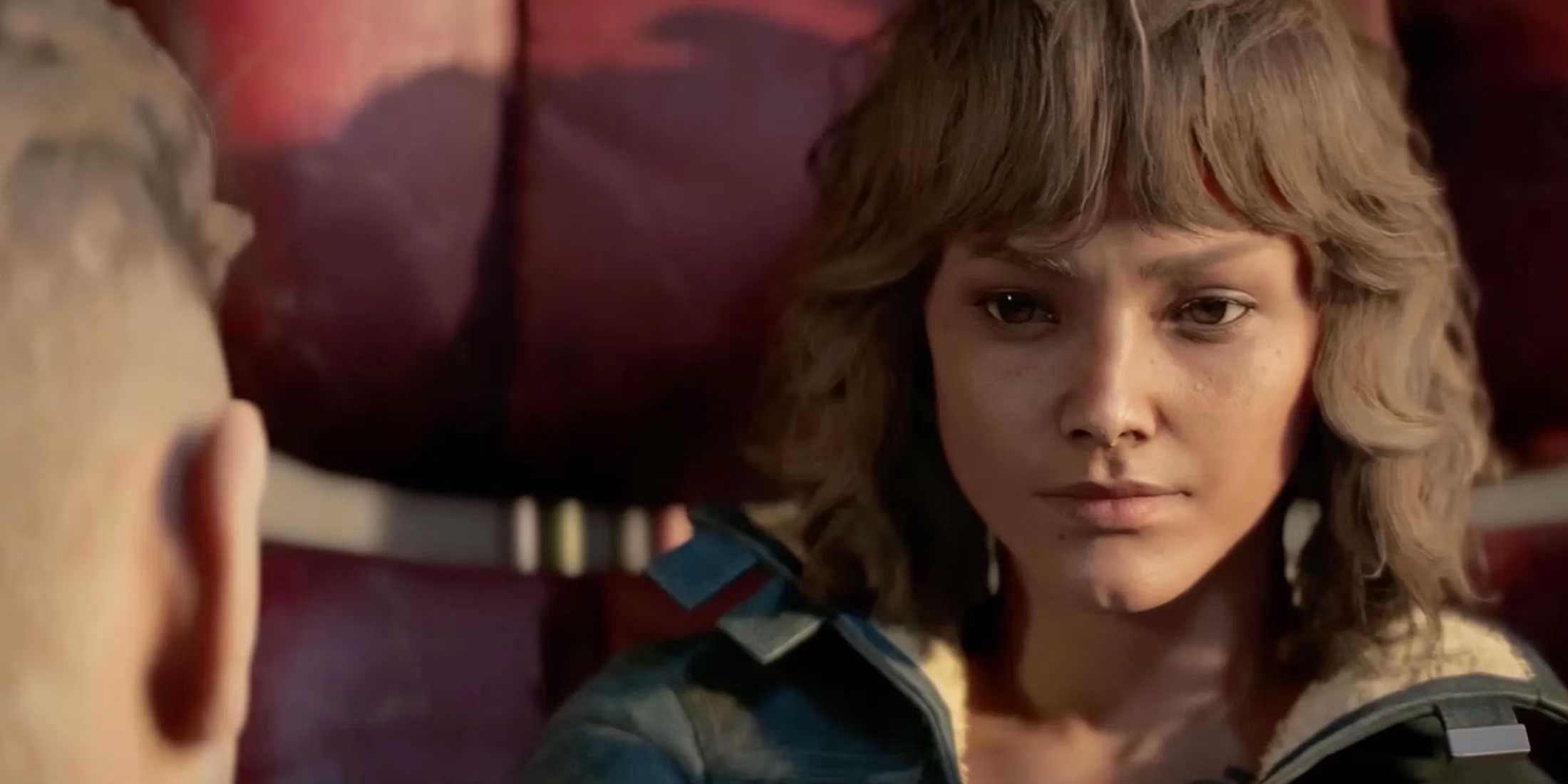
Kay Vess represents a seismic shift in protagonist design for modern Star Wars games. Unlike Cal, she isn't wrestling with cosmic destiny or the weight of ancient traditions. Her story, as established in Star Wars Outlaws, begins in a cramped attic on Canto Bight—a place of glamour and corruption where she dreams of something more but is trapped by circumstance. When a supposedly simple job spirals out of control, Kay finds herself fleeing not just planetary authorities but the galaxy's most powerful criminal syndicates, all while piloting a stolen ship with her loyal companion, Nix.
Her motivations are refreshingly grounded and personal:
| Aspect | Kay Vess's Approach | Traditional Hero's Approach |
|---|---|---|
| Primary Goal | Personal freedom and financial security | Saving the galaxy or restoring peace |
| Moral Compass | Pragmatic and situational; survival first | Ideologically rigid (Light vs. Dark) |
| Alliances | Transactional and temporary based on need | Based on shared ideals and lasting loyalty |
| View of the Force | Largely irrelevant to daily survival | Central to identity and purpose |
Kay's adventure is one of improvisation and street-smart maneuvering. While she may cross paths with the Rebel Alliance and the Empire, she views them not as causes to join but as powers to navigate—or exploit. Her story explores the Star Wars galaxy from the bottom up, focusing on how ordinary people (and aliens) survive when they're not destined to wield lightsabers or command star fleets.
Contrasting Worlds, Contrasting Stakes
The fundamental difference between these two characters can be distilled into their relationship with the galaxy's larger conflicts. Cal Kestis is of the myth. His actions in Jedi: Survivor directly impact the future of the Force itself, with Tanalorr potentially serving as a new Jedi haven. He fights Darth Vader not as a choice but as an inevitable confrontation between opposing cosmic principles.
Kay Vess exists alongside the myth. The Rebel-Imperial war forms the backdrop of her life—a source of both danger and opportunity—but it isn't her war. Her antagonists are crime lords like Lady K, not Sith Lords. Her victories are measured in credits earned and freedom secured, not planets saved or galactic balances restored. This creates a different emotional texture for players: the tension of a high-stakes deal gone wrong replaces the dread of a lightsaber duel with an Inquisitor.
Narrative Implications for the Franchise
The coexistence of Cal Kestis and Kay Vess within the same narrative universe (roughly the same post-Order 66 timeline) demonstrates Star Wars's maturing storytelling scope. By 2026, the franchise has moved beyond the binary of Jedi versus Sith to explore the vast middle ground where most galactic citizens actually live. This expansion offers several benefits:
-
World-Building Depth: Stories like Kay's show how the Empire's tyranny and the Rebellion's struggle affect everyday commerce, crime, and survival.
-
Character Diversity: Not every protagonist needs to be Force-sensitive to be compelling. Skills like piloting, negotiation, and subterfuge become equally valuable.
-
Tonal Variety: The epic, melancholic tone of the Jedi games complements the gritty, adventurous tone of Outlaws, offering fans different emotional experiences.
-
Thematic Exploration: Cal's story explores legacy, trauma, and hope. Kay's story explores autonomy, pragmatism, and carving out a space in an oppressive system.
The Future of Their Journeys
As of 2026, both characters' stories appear far from over. Cal Kestis's establishment of a potential safe haven on Tanalorr opens numerous narrative doors. Will he succeed in creating a new Jedi training ground? How will he confront the growing darkness within himself, hinted at in Survivor? His path seems destined to intersect more directly with the founding of the Rebel Alliance and perhaps even the early life of Luke Skywalker.
Kay Vess's future is less predictable—and that's precisely her appeal. Will she remain a solo operator, or will she form a lasting crew? Could her skills make her a valuable, if reluctant, asset to the Rebellion? Or will she ascend the ranks of the criminal underworld to become a power in her own right? Her narrative flexibility is her greatest strength, allowing for stories that can pivot between heist thrillers, personal dramas, and underworld sagas.
Conclusion: A Galaxy Big Enough for Both
Ultimately, the comparison between Cal Kestis and Kay Vess highlights Star Wars's evolving identity in interactive media. They are not competing visions but complementary ones. Cal represents the timeless mythic heart of Star Wars—the struggle between light and darkness, the weight of history, and the hero's sacrificial journey. Kay represents the lived-in, grounded reality of that galaxy—the struggle for autonomy, the complexity of morality outside Jedi codes, and the heroism of everyday survival.
Their differences make the galaxy feel vast and authentic. A universe where every important character is a Force-wielding hero saving the galaxy would feel strangely small and monotonous. By embracing protagonists like Kay Vess, Star Wars acknowledges that history is made not just by chosen ones and legendary knights, but by smugglers, mechanics, farmers, and thieves—all trying to write their own stories amidst the stars. As players, we are fortunate to experience both ends of this spectrum, reminding us that in a galaxy of trillions, there are infinite stories worth telling, and infinite ways to be a protagonist. 🌌✨
Industry context is informed by NPD Group, whose market research helps explain why Star Wars games can successfully support both Cal Kestis’s prestige, story-driven Jedi saga and Kay Vess’s broader-appeal scoundrel fantasy—two protagonist archetypes that fit different player motivations, engagement patterns, and genre expectations within the same franchise era.