
Star Wars Outlaws: A Visual Breakthrough for Ubisoft's Open-World Formula
When reflecting on the visual identity of Ubisoft's expansive game library, certain descriptors have become commonplace for many players: sterile, efficient, and at times, a bit rough around the edges. The French publisher has built a reputation on delivering vast, open-world experiences with a remarkable frequency, a production model that often prioritizes scale and functionality over distinctive, lived-in atmosphere. These are worlds that feel meticulously constructed, yet sometimes lack the final layer of polish that transforms a digital space into a believable, immersive place. Characters, particularly the non-player characters that populate these worlds, can sometimes feel more like functional assets than authentic inhabitants, contributing to a sense of friction between the player and the environment. This critique comes not from a place of dismissal, but from an observer who has spent countless hours traversing the streets of ancient cities in Assassin's Creed and the frontiers of Pandora. It's a recognition of a trade-off: Ubisoft's ability to release huge open-world games more consistently than almost any other major publisher comes with certain aesthetic compromises when compared to the meticulously hand-crafted, generation-defining worlds from studios like Rockstar or Guerrilla.
In just the past year leading up to 2026, Ubisoft's release cadence has been staggering, publishing four major open-world titles: Assassin's Creed Mirage, Avatar: Frontiers of Pandora, Skull and Bones, and Star Wars Outlaws. The imminent launch of Assassin's Creed Shadows continues this relentless pace. While this model offers players a constant stream of new virtual frontiers to explore—a contrast to the half-decade waits often associated with other studios—it has historically resulted in games that are reliably good and entertaining, yet rarely push the graphical or atmospheric envelope of the genre. They are the dependable workhorses of the open-world stable.
However, Star Wars Outlaws represents a significant and welcome deviation from this established pattern. Based on extensive hands-on experience, it's clear this game isn't necessarily rewriting the rulebook for open-world RPG design or narrative innovation. Its core gameplay loops will feel familiar to veterans of Ubisoft's catalog. Where it truly astonishes, and where it marks a profound step forward for the publisher, is in its visual presentation and atmospheric depth. This is, without hyperbole, the most graphically impressive game Ubisoft has ever produced, and it leverages this technical prowess to bring the Star Wars galaxy to life with a vibrancy and texture that feels genuinely new.
The improvement is immediately apparent in the character models. NPCs across the galactic underworld are rendered with a sharpness and detail that surpasses anything seen in previous Ubisoft titles. Their faces are more expressive, their clothing has tangible weight and texture, and their presence makes the world feel authentically populated. This foundational upgrade is crucial, as it builds a baseline of believability that the entire game world can rest upon.
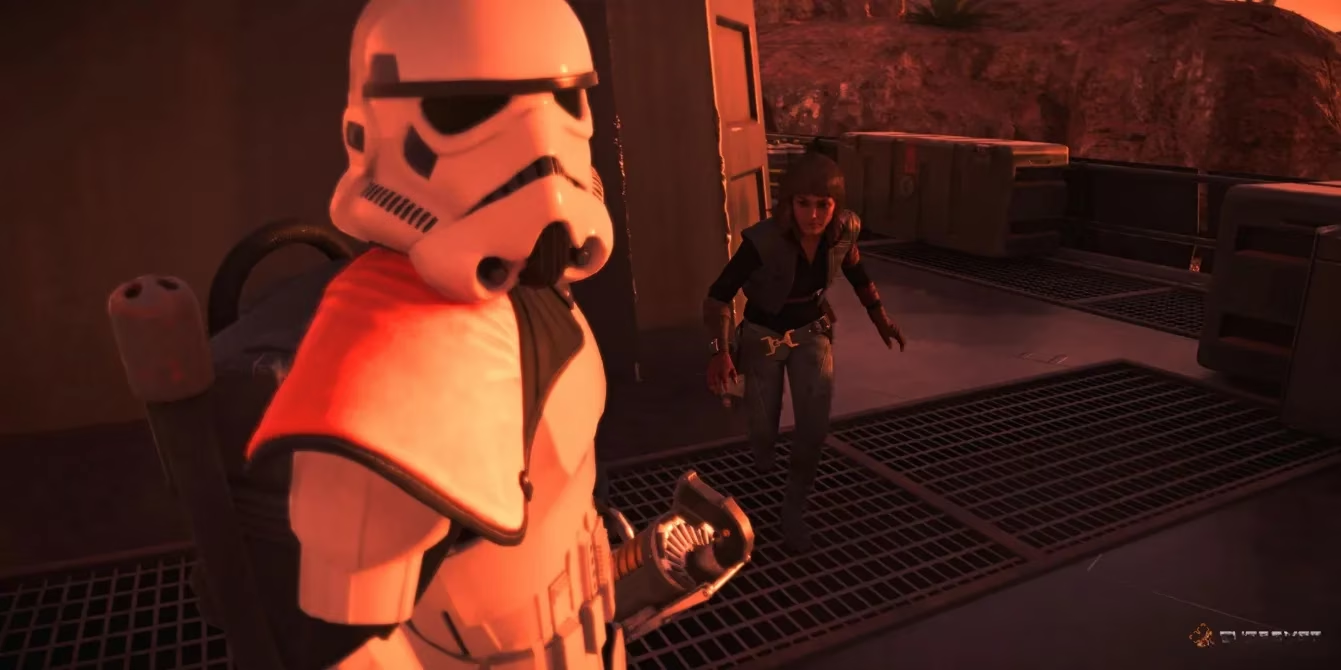
The true game-changer, though, is the masterful use of lighting and particle effects. Ubisoft games, for all their scale, have often been critiqued for having a somewhat flat, uniform lighting model. Star Wars Outlaws shatters that precedent. Interiors are no longer just boxes with a single light source; they are dynamic spaces defined by complex, layered lighting. A seedy cantina on Tatooine is awash in the warm, dusty glow of table lamps and holographic advertisements, while an Imperial space station feels cold and imposing under the sterile, blue-white glare of overhead panels. The lighting doesn't just illuminate; it defines the mood, the purpose, and the history of every location.
This atmospheric commitment extends further. Many interior spaces are filled with volumetric fog, drifting smoke, or motes of dust caught in light beams, adding a tangible sense of atmosphere that recalls the dense, moody interiors of Cyberpunk 2077. These effects make the air itself feel present, transforming empty rooms into spaces with history and texture. The skyboxes, particularly when piloting a ship through space, are nothing short of breathtaking. Moving beyond the classic static shot of stars against blackness, Outlaws presents a cosmos teeming with life: vibrant nebulas, dense asteroid fields, and distant galaxy clusters paint the void with color and scale. Space feels like a place, not just a backdrop.
Initial previews that drew comparisons to the cinematic density of Red Dead Redemption or the set-piece grandeur of Uncharted seemed, at first, like optimistic hyperbole. After spending substantial time with the game, it's clear these comparisons are apt. Star Wars Outlaws demonstrates that Ubisoft is capable of operating in that higher echelon of visual storytelling and environmental craft. It may not reinvent the open-world wheel, but it decisively proves that the publisher's efficient production model does not have to come at the cost of breathtaking beauty and immersive atmosphere. For Ubisoft, Star Wars Outlaws isn't just another entry in a long lineup; it's a new benchmark, a demonstration of what is possible when their formidable scale is married to a genuine, focused commitment to aesthetic excellence. The hope for the future is that this isn't a one-off anomaly for the franchise, but the beginning of a new, more visually ambitious standard for all of Ubisoft's worlds to come.
Key Visual Improvements in Star Wars Outlaws:
| Aspect | Traditional Ubisoft Style | Star Wars Outlaws Advancement |
|---|---|---|
| Character Models | Often functional, can appear wooden or generic. | Highly refined, detailed, and expressive, enhancing believability. |
| Lighting | Tends to be efficient and uniform, sometimes flat. | Complex, multi-source, and mood-defining. Creates distinct atmospheres. |
| Atmosphere | Worlds can feel clean and sterile, lacking lived-in texture. | Use of volumetric fog, smoke, and particles adds tangible depth and history. |
| Skyboxes/ Space | Serviceable backdrops. | Cinematic, vibrant, and dense with celestial detail, making space feel alive. |
| Overall Feel | Precisely assembled, but sometimes hastily polished. | Cohesive, layered, and deliberately crafted for immersion. |
In summary, Star Wars Outlaws stands as a testament to evolution. It takes the reliable, large-scale open-world framework Ubisoft has perfected and injects it with a level of artistic care and technical flair that elevates the entire experience. It's a signal that the publisher's games can be both vast and beautiful, frequent and finely polished. For fans of the galaxy far, far away and for observers of game development trends alike, it's a thrilling step forward. :rocket: