
Star Wars Outlaws Finally Ditches Forced Stealth in a Dazzling 1.4.0 Revamp
Let’s be real: when Star Wars Outlaws first launched a couple of years ago, it was like picking up a beautiful, handcrafted blaster only to find out it fired wet noodles if you didn’t tiptoe through every heist like a Twi’lek librarian. I loved the worlds, the speeder, the little scamp Nix — but the constant “do not raise the alarm” moments felt like the game had strapped a retractable claw to my ankle, yanking me backward every time I wanted to just blast my way out of a bad situation. Well, Ubisoft has finally listened. Title Update 1.4.0 is here, and it’s basically a giant “WANTED: DEAD, NOT JUST HIDDEN” sign over the whole galaxy.
This isn’t a tiny tweak — it’s the kind of overhaul that turns a cranky droid into a smooth-talking protocol unit. The marquee change? Forced stealth has been mostly kicked into the Sarlacc pit. You read that right. Nearly all those mission objectives that screamed “do not get caught” and then teleported you back to a checkpoint like a time-loop punishment are gone. Now, if a guard spots me while I’m trying to pinch a vault code, the game doesn’t slap my hand — it just lets the chaos unfold. My pulse rifle stays locked and loaded even when I’m climbing or grappling, which means I can feel like a proper scoundrel instead of a ballet dancer who keeps losing her prop.
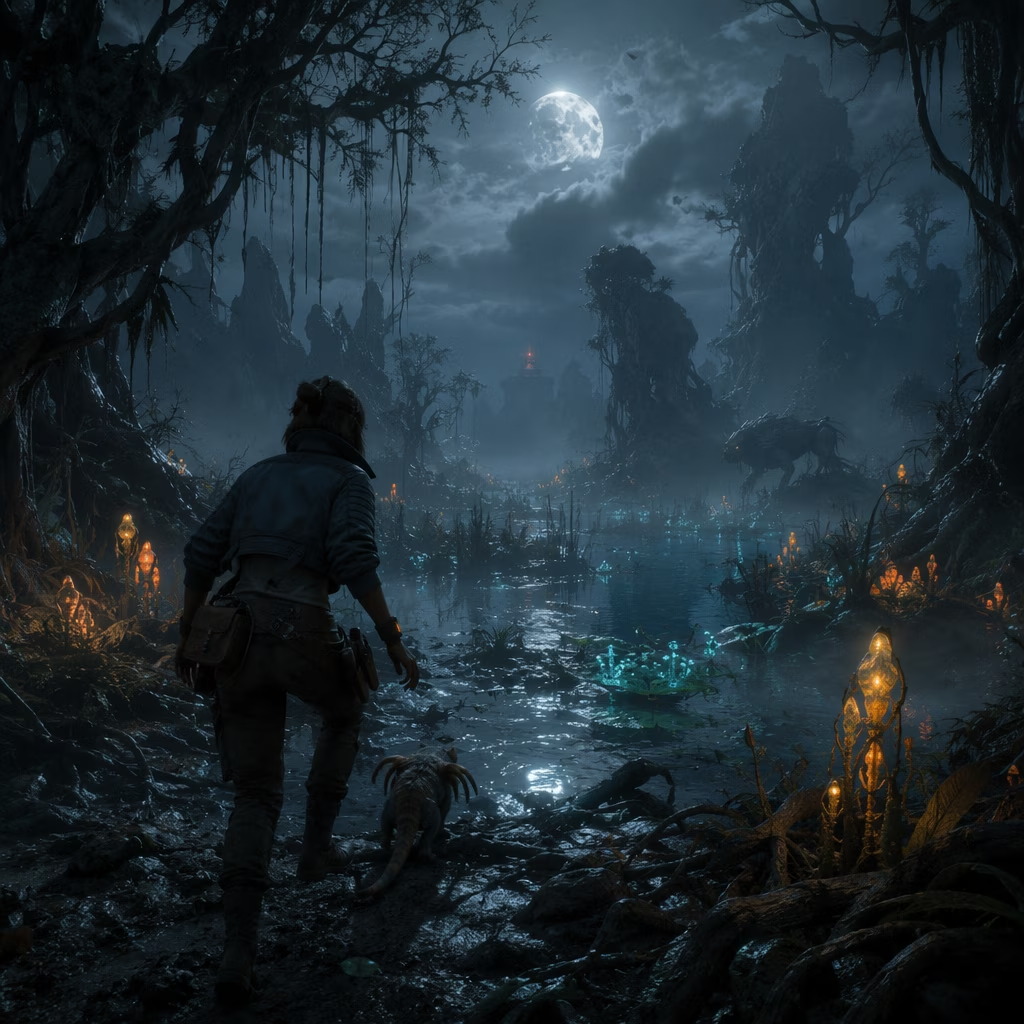
The update hit PlayStation 5, Xbox Series X and S, and PC just in time for the 2026 holiday sales, where you can snag the game for a laughably low $39.99. And boy, does it deliver. The patch notes read like a love letter to those of us who complained about everything from enemy telepathy to facial animations that seemed borrowed from a mannequin factory. I’ve spent a dozen hours living in this new version, and I’m ready to walk you through the highlights with the glee of a Jawa finding a droid that actually works.
Where Stealth Meets Strategy (And Sometimes A Grenade)
The AI has gone from being a bunch of predictable stormtroopers who couldn’t hit a barn to adversaries that actually make me think. Enemy detection is more logical now, and the tactical decision-making in combat encourages me to treat firefights like a dejarik match rather than a shooting gallery. The damage cadence has been rejigged: per-shot damage decreased, but the longer a gunfight drags, the more you’ll feel the heat — like a pressure cooker slowly turning up the dial. It stops engagements from feeling like insta-kill nightmares while still making me respect the weight of sustained blaster fire.
I also adore the addition of weak points on various enemies. Creatively, it feels like each hostile now carries a fragile little story: a droid’s power cell, a trooper’s jetpack nozzle, a beast’s glowing underbelly. Headshots finally matter, too, with a damage multiplier that makes a well-placed shot worth more than a dozen panic-sprayed bolts. And my blaster modules? The Ion and Power modules now perform like tuned instruments instead of random party tricks. The Power module no longer obliterates Kay with its own blast damage, which is a mercy — my previous self-inflicted deaths could’ve filled a highlight reel titled “Why Scoundrels Need Safety Training.”
Cameras have been stripped of their omniscience as well. The detection feedback is much clearer, and an optional setting lets you amp up the visual indicators. I can now see exactly how screwed I am when a camera’s cone starts flashing orange, and the addition of NPC tags (neutral white, aware orange, combat red) turns chaotic brawls into a readable tapestry. It’s a godsend for folks like me who confuse friend from foe during a smoky cantina shootout.
Smooth Moves and Snappy Shots
The control and camera improvements feel like someone finally oiled the game’s joints. Jumping now gives me aerial control, so I’m no longer victim to the whim of weird physics every time I try to cross a gap. The cover camera has been massaged into usefulness, with a manual shoulder swap that’s the difference between peeking out like a professional and dangling my head into a blaster-bolt bouquet. When I aim down sights, the spread and recoil manageability actually make my blaster feel like an extension of my arm rather than a hyperactive Kowakian monkey-lizard.
A special shout-out to the custom controller preset, which arrived like an early Life Day gift. I can remap buttons for Kay, the speeder, and the Trailblazer separately. That’s the kind of granularity I normally only expect from PC mods, and it’s a boon for anyone whose muscle memory screams different commands for dogfights versus on-foot sneaking. Toss in the new ‘strong’ aim assist setting and auto-transfer for climbing — which lets me hop between climbable surfaces without pressing a button — and the game now respects my time and my arthritic thumbs.
Sights, Sounds, and Finally Some Facial Acting
Remember when dialogue scenes looked like everyone was holding in an uncomfortable secret? The update has added facial animations to gameplay dialogue and vendors, and it’s genuinely transformative. Now, when a scummy dealer lies to my face, I can see his eyebrow twitch. The improved visuals extend to worlds themselves: grass and mud textures at a distance no longer resemble impressionist soup, and light sources pop from farther away, making Toshara’s savannahs feel like living paintings. Static waterfalls have been fixed — a small but soulful correction.
Audio gets its due, too. Enemy chatter while ducking in and out of cover builds atmosphere, and the fix for DualSense controller sound on PS5 means I can finally feel every swoosh and electronic whine through my palms. The accessibility features got a massive upgrade: menu narration now reads lockpicking and slicing minigames, objective hints, and even which Sabacc card I’m holding. You can crank narration speed to 400%, and the sound effects slider has been intelligently split into gameplay and background — a detail I didn’t know I needed until I lowered that ambient hum to hear enemy footsteps like a hungry anooba.
Under the Hood and Out in the Stars
Several maddening bugs have been squashed. No more getting stuck on the Trailblazer after certain missions (I once had to reload three times on Akiva). The “Never Tell Me the Odds” trophy now properly counts ram kills, so my starship-battering playstyle finally pays off. Arcade music no longer vanishes after starting a new game, restoring a slice of nostalgia I’d missed. And the new Bug Reporter website, while not the sexiest addition, is a practical lifeline. It functions like a public sticky-note wall where I can see what issues are being investigated and add my own woes directly to the team. Transparency like this is rarer than a friendly Gamorrean.
Of course, one Sarlacc-sized caveat remains: the PC issues tied to Windows 11 24H2 aren’t fully fixed yet. Ubisoft says they’re “working hard to deploy a permanent fix,” and as someone who has dual-booted that cursed update, I believe the struggle. If you’re affected, hold tight — this patch wasn’t meant to be your savior in that department. But for everyone else, this update is a rejuvenating bacta dunk.
Final Thoughts from a Recovering Cynic
Watching Star Wars Outlaws evolve reminds me of rehabilitating a stray Corellian hound: it always had the heart and the pedigree, but it needed patience, affection, and the occasional firm “no more stealth-only missions.” The 1.4.0 update doesn’t just patch holes — it reshapes the experience to put player choice at the center. Whether I want to ghost through an Imperial base like a whisper or kick the door down with a thermal detonator in each fist, the game finally lets me. And in 2026, that’s the best reason to revisit the Outer Rim.