
The Sonic Scoundrel: Composer Wilbert Roget II Crafts a Bold New Sound for Star Wars Outlaws
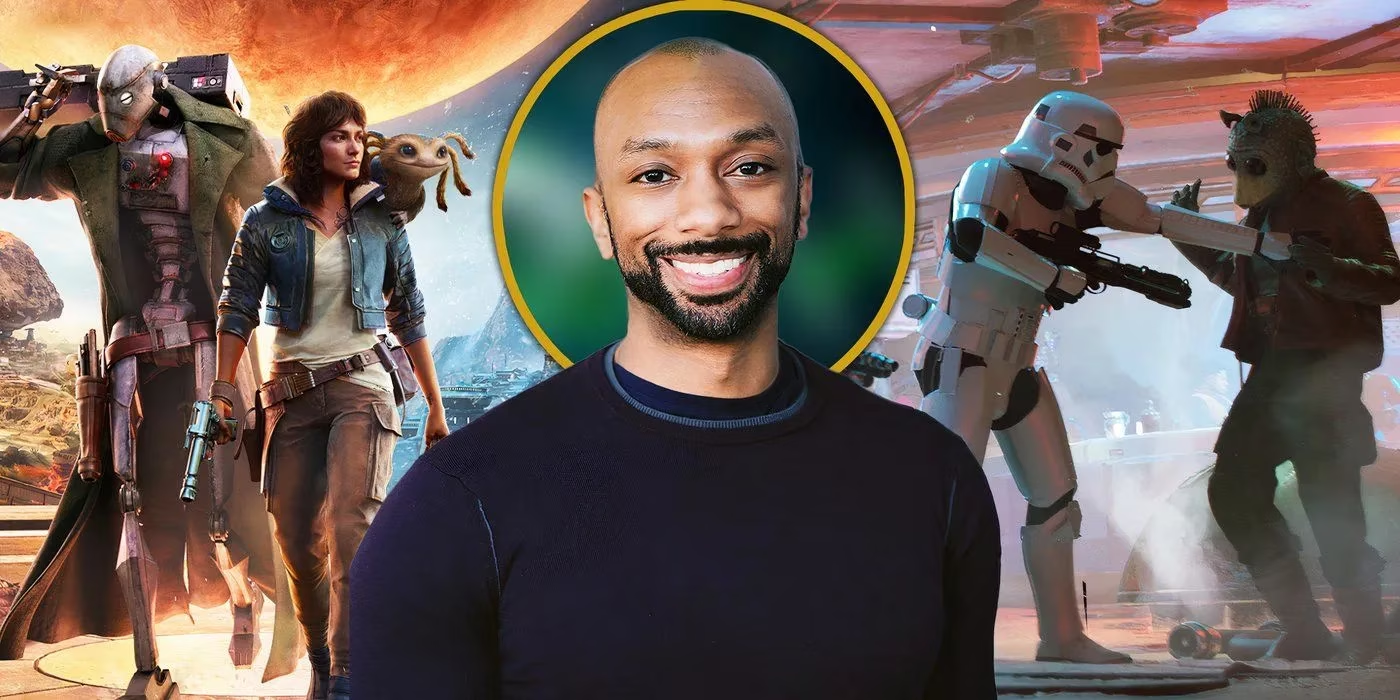
In the sprawling, neon-drenched underworld of Star Wars Outlaws, the atmosphere is palpable. While the open-world gameplay offers players a chance to explore familiar and new corners of the galaxy, it is the game's distinctive auditory landscape that truly brings the scoundrel's life to life. Composer Wilbert Roget II, a veteran of the Star Wars musical universe, was tasked with a unique challenge: to define the sonic identity of the criminal underworld, a realm far removed from the epic clashes of Jedi and Sith. His approach was not to replicate the iconic John Williams sound but to forge something entirely new, a musical tapestry woven from analog synthesizers, improvised percussion, and the gritty spirit of its protagonist, Kay Vess.
Forging the Scoundrel's Sound: A Three-Part Philosophy
When Ubisoft and Massive Entertainment approached Roget, their directive was clear: find a "scoundrel sound." This wasn't the music of destiny-bound heroes or tyrannical empires; this was the score for a hustler surviving on wits and improvisation. Roget's creative blueprint rested on three core pillars:
-
Solo Melodies for a Solo Operator: Kay Vess's character is anchored by solo instruments, most notably an electric violin for her main theme, "Kay Vess, The Outlaw." This choice gives her a distinct, personal voice amidst the galactic chaos.
-
Elemental & Improvised Textures: To mirror Kay's resourcefulness, Roget built a library of "Foley instruments"—everyday objects like wine bottles, coffee tins, and beer cans. He recorded, cleaned, and processed their sounds to create a percussive, makeshift quality. 🎵 "She's just using whatever she can get her hands on," Roget explained, "and that's how she's succeeding. I figured, 'Why don't I do the same as a composer?'"
-
The Analog Synthesis Blend: A key discovery was the use of vintage analog synthesizers. Roget noted that John Williams himself used analog synths in the original trilogy, most famously in "The Magic Tree" scene on Dagobah. By blending these warm, electronic textures with a traditional orchestra, Roget achieved a modern yet classic feel, akin to the work of Hans Zimmer. This fusion became the bedrock of the score's contemporary edge.

The Rhythm of the Underworld: Modern Beats in a Galaxy Far, Far Away
Players quickly noticed a fresh, percussive drive in Outlaws' music. Roget's inspiration was, in his words, "selfishness and opportunism." As a composer deeply engaged with sound design, he leveraged his new gear—specifically compact Korg synthesizers like the Volca Sample and Volca Drum. These devices provided a "low-tech high-tech sound," perfect for crafting the syncopated rhythms and booming bass that underscore Kay's adventures.
"As a gamer myself, I love hearing rhythm and interesting syncopations and beats," Roget said. "It actually never even occurred to me that this might be strange, because if you think about it, the way John Williams writes for Star Wars is all about rhythms and syncopations."
This modern sonic layer was crucial for the game's dynamic music systems, especially during stealth and combat.
A "Wild, Crazy" Dynamic Music System
One of Roget's most significant innovations was designing a reactive audio framework for the game's stealth and combat. Traditional orchestral scores are difficult to manipulate in real-time, so the synth and percussion elements became the flexible backbone of a multi-layered system.
The team identified three core AI states for enemies: Calm, Searching, and Combat. For each state, music was composed at three intensity levels: Low, Medium, and High. This created a complex, seven-layer matrix where elements like strings, brass, and synth percussion could crossfade seamlessly based on player actions.
-
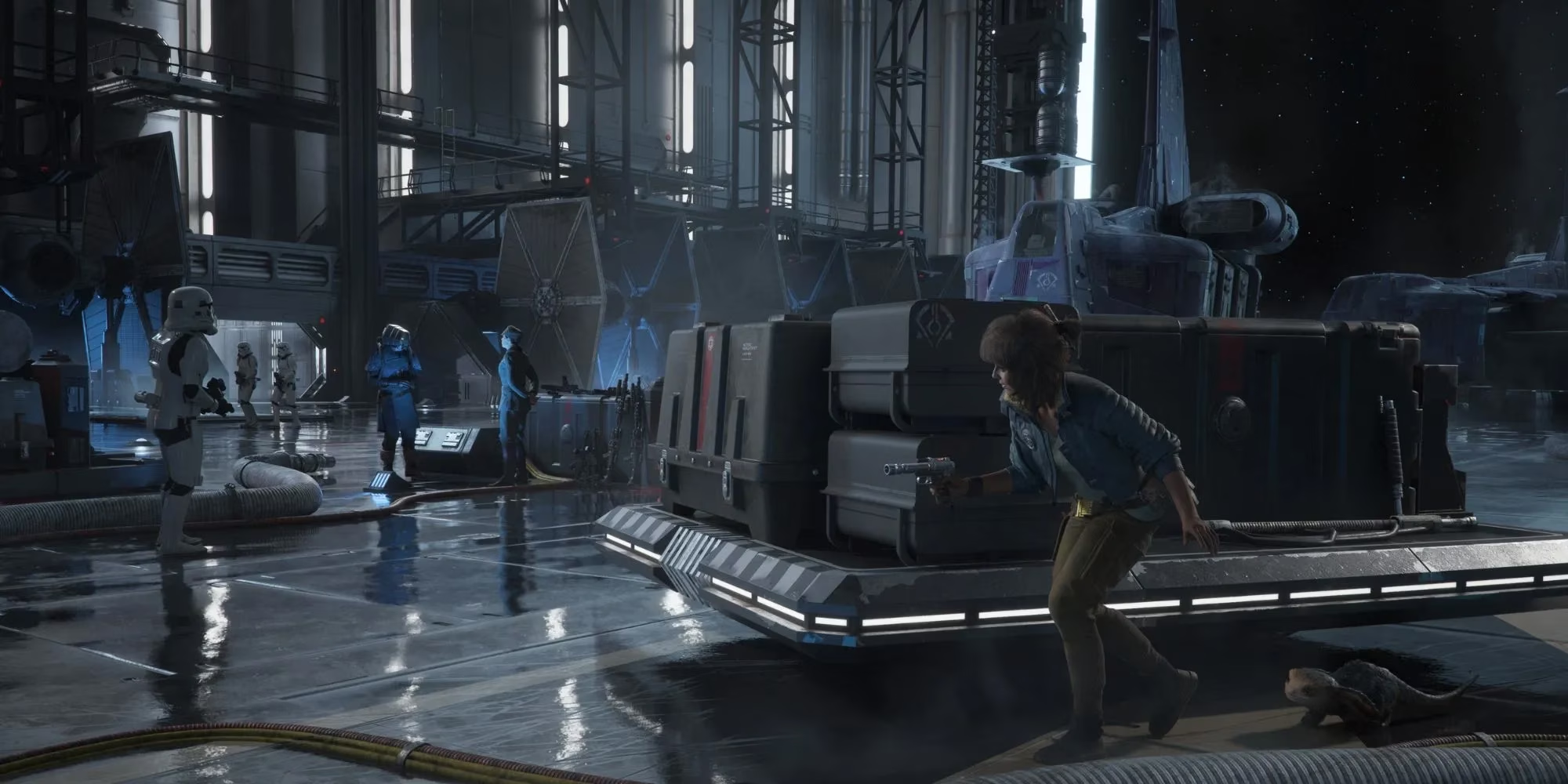
Stealth Sequences: The music is assembled in real-time from up to 13 abstract layers, creating a non-looping, ever-evolving soundscape that reacts to whether Kay is hidden, being hunted, or evading capture.
-
Combat Escalation: A low-intensity encounter might feature only strings and light percussion. As danger escalates, brass and woodwinds swell into the mix. At peak intensity, string parts are swapped for more aggressive recordings, all while maintaining a smooth auditory transition.
New Themes for a New Underworld
Roget made a conscious decision to craft original leitmotifs for nearly everything in the game. While classic Star Wars themes didn't fit Kay's narrative—she's working for crime lords like Jabba, not against them—one iconic melody was preserved: the stormtrooper motif from A New Hope. This theme was expanded upon to score all Imperial encounters, grounding the galactic threat in a familiar, menacing fanfare.
Beyond Kay's theme, Roget composed a suite of new character melodies:
| Character | Theme Inspiration & Description |
|---|---|
| The Trailblazer | Began as a theme for Kay's ship but evolved into a secondary main theme representing her crew, adventure, and found family. |
| ND-5 | A film noir-inspired piece, evoking a "tortured" private detective. Roget played guitar on this track, embracing a melancholic, harmonic style. |
| Nix | A three-part narrative in music: Nix's captivity, liberation by Kay, and their joyful adventures together, blending lugubrious sounds with upbeat, Irish- and African-influenced melodies. |
| Riko (Kay's mother) | A theme structured as a musical timeline of her hidden history as a nomadic slicer, conveying moments of hope, loss, and resilience. |
Collaborative Galaxy: Bringing in Specialist Composers
Faced with the monumental task of scoring an entire open-world galaxy, Roget's first response to doing it all alone was, "Absolutely not." He strategically assembled a team of specialists to ensure auditory diversity and depth:
-
Cody Matthew Johnson: Tasked with composing all the diegetic cantina music. His work creates unparalleled immersion, making each spaceport bar feel alive with its own unique sonic personality.
-
Kazuma Jinnouchi (Metal Gear Solid, Ghost in the Shell): Brought his expertise in Japanese-influenced composition to score the planet Kijimi and the enigmatic Ashiga Clan, perfectly blending tradition with the game's stealth mechanics.
-
Jon Everest (Disintegration): His mastery of blending synthesis with orchestration was deployed for the Crimson Dawn syndicate and the planet Akiva, adding a hard-hitting, electronically charged vibe to those factions.
A Legacy of Innovation
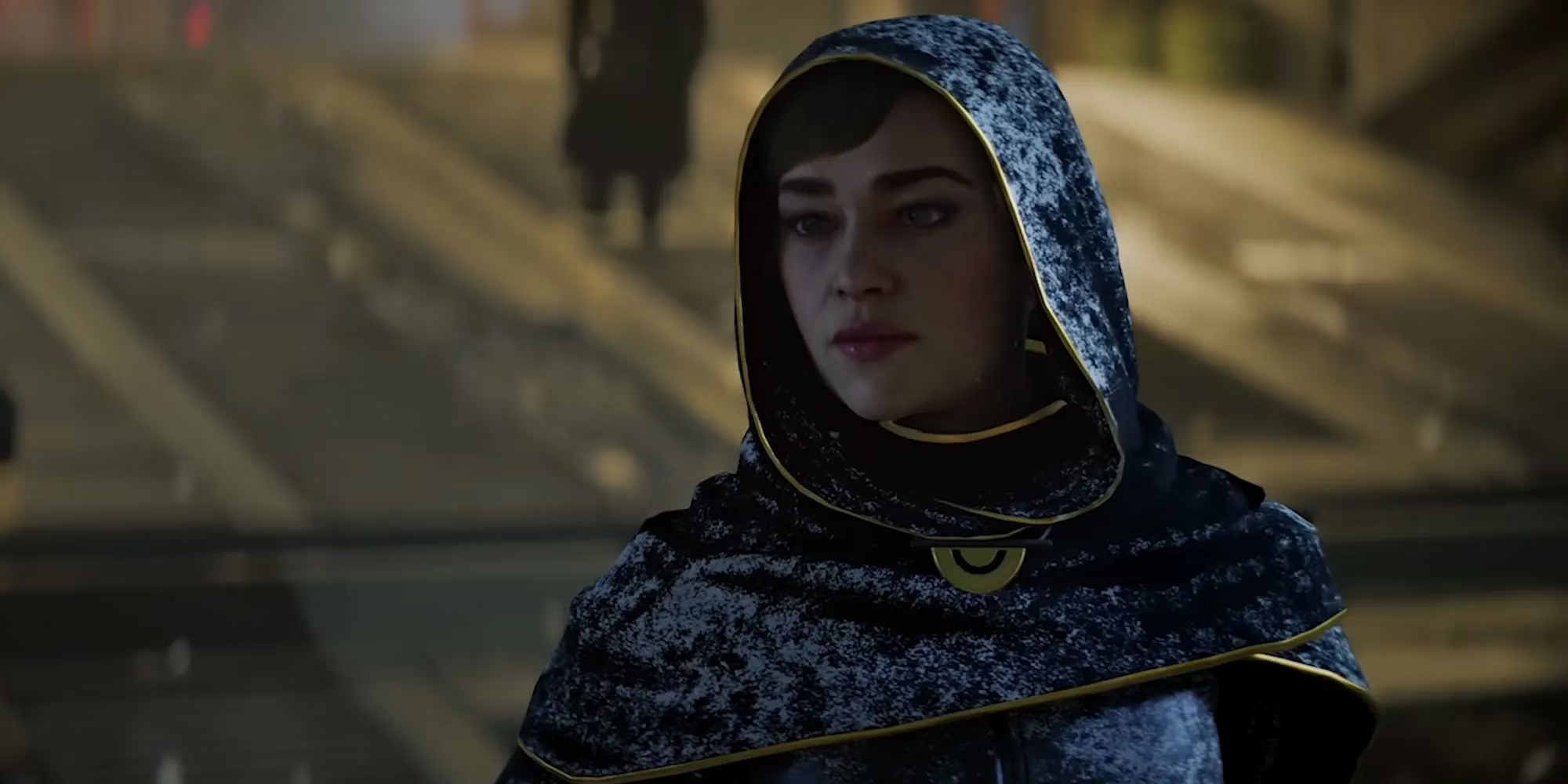
By 2026, Star Wars Outlaws is celebrated not just as a groundbreaking open-world adventure but as a landmark in video game scoring. Wilbert Roget II's work demonstrated that the Star Wars auditory universe could expand beyond symphonic tradition into gritty, rhythmic, and intimately character-driven territories. The score stands as a testament to creative risk-taking—proving that the soul of a scoundrel is best expressed through the clink of a bottle, the hum of an analog synth, and the soaring melody of an electric violin charting its own path through the stars.