Why Star Wars Outlaws Still Haunts Me in 2026
I remember booting up Star Wars Outlaws for the first time back in 2026—two years after its release—and being stunned by how alive Mos Eisley felt. It was the busiest, most intricate version of Tatooine I’d ever seen. I wandered into a dusty cantina not because a quest marker told me to, but because I was curious. A Twi’lek barkeep mentioned her shipment was stolen by the Ashiga Clan, and just like that, I was off on a personal odyssey that had nothing to do with the main story. This is where Outlaws shines: in the messy, organic moments that emerge when you abandon the beaten path.
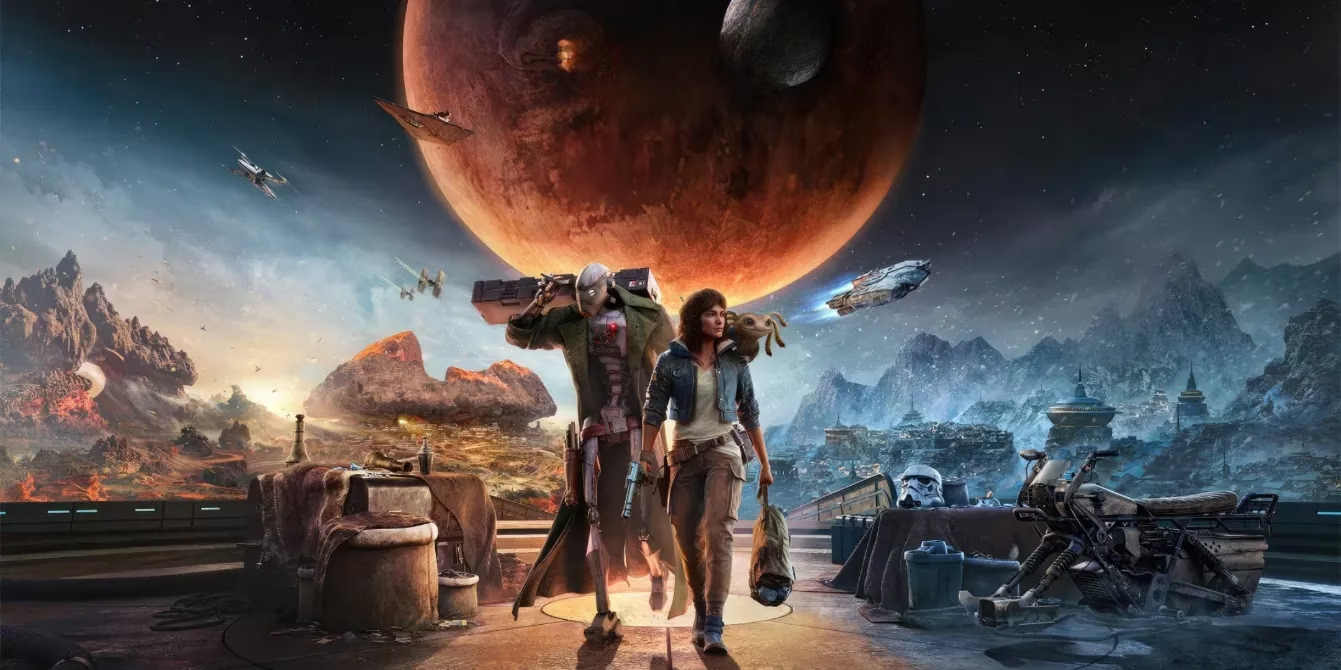
The game thrusts you into the boots of Kay Vess, a scoundrel raised on the casino world Canto Bight. She’s determined to pull off one final heist and escape to a life of luxury with her pet merqaal, Nix. In 2026, the parallels between Kay’s hyper-capitalist upbringing and our own world felt sharper. The opening hours still rush you through her backstory, a narrative stumble I wish Massive Entertainment had addressed with a Director’s Cut. Yet, once I accepted the hurried pace, I fell in love with the underworld syphoning all my attention.
Four syndicates—the Hutts, Pykes, Crimson Dawn, and Ashiga Clan—gorge each planet’s power vacuums. 📊 My reputation with them changed on the fly. One moment I’d sneak into a Crimson Dawn hideout, the next I’d betray them mid-mission because the Pykes offered a rare blaster upgrade. This constant, fluid allegiance system kept me hooked. It felt like a game of Sabacc where I could change the rules.
But the gameplay? A hybrid I never knew I needed. Kay fights like a mix between Watch Dogs 2’s hacker and Uncharted’s acrobat. She doesn’t wield a lightsaber—three punches usually drop an enemy, which still makes me laugh—but her blaster and Nix become a ballet of distractions, takedowns, and narrow escapes.
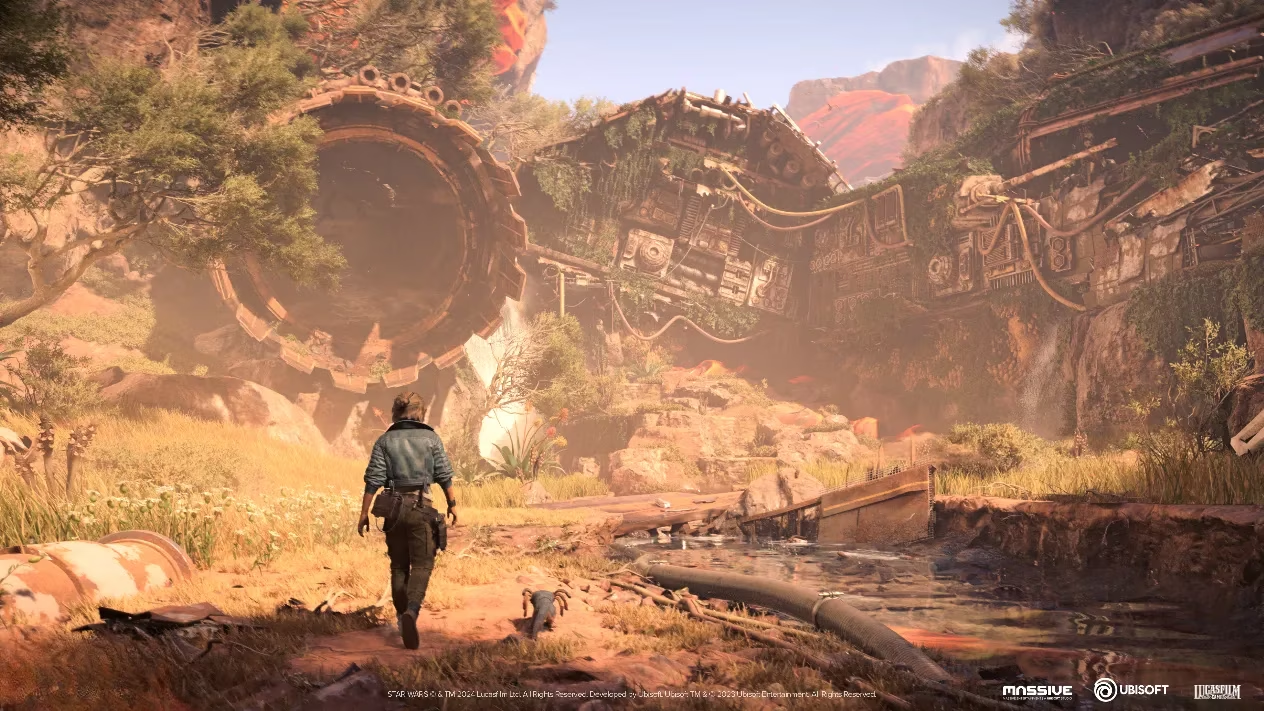
Nix is the real star. He’s a fluffy creature with massive, expressive eyes that command entire toy aisles now. But he’s also a gameplay Swiss Army knife. I’d send him to pull a lever across a chasm, swipe a keycard from an imperial officer, or savage a stormtrooper’s ankle while I flanked. There’s a mission where he gets captured, and the sudden emptiness without his chirps and his tactical utility is devastating. I realized my entire playstyle revolved around him. Losing Nix made me appreciate how integral he is—not just as a companion, but as an extension of Kay’s character.
This connection, however, made the script’s shortcomings sting even more. The main plot, where Kay recruits a crew for the Canto Bight vault heist, often ambles into cliché. ND-5, a droid with a rakish jacket and a figure that defies engineering logic, steals scenes and emotional beats, but the story gives him too little foundation. By 2026, fans still debate whether a major expansion or a sequel could salvage the narrative potential. I craved missions that let me linger with these companions outside the breakneck pace of betrayal and blaster fire.
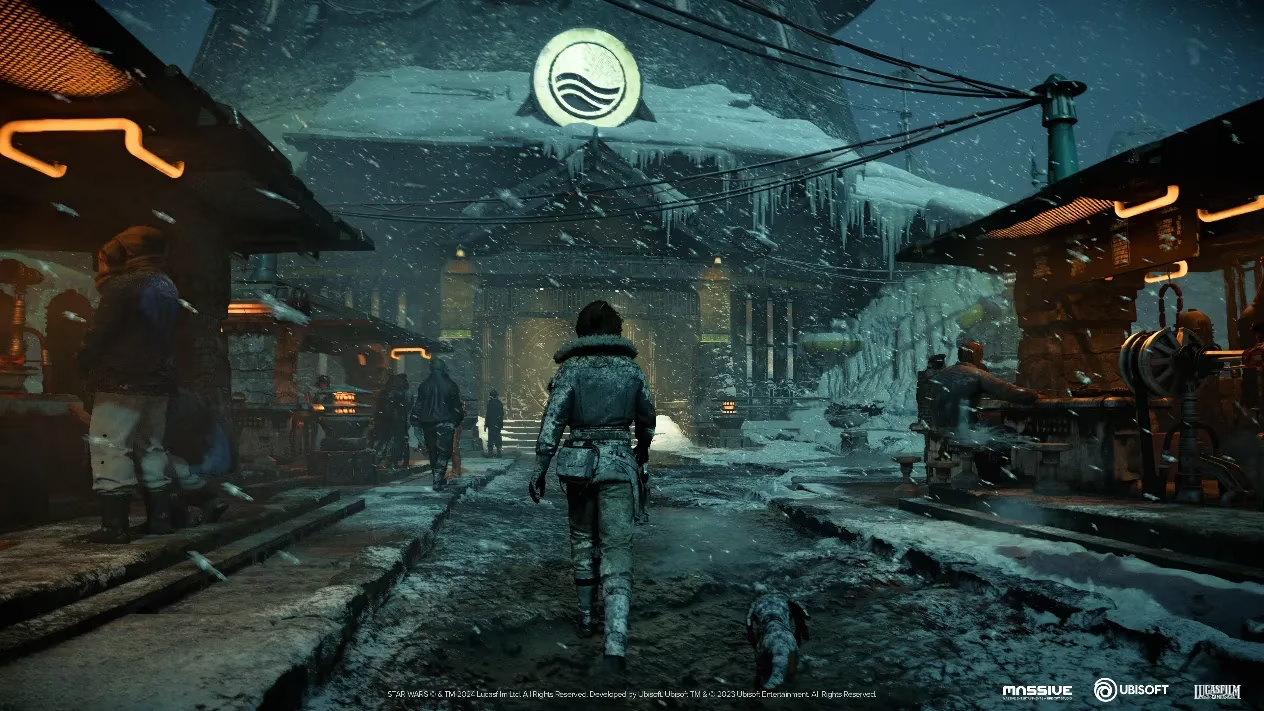
The open worlds are a mixed bag of atmospheric wonders. 🌌 Toshara’s wind-carved mesas and scattered farmsteads reminded me of a galactic Monument Valley. Kijimi’s snow-clad city, dense with syndicate skirmishes, made every back alley a stage for intrigue. Tatooine, though visited countless times in games, has never felt this lived-in. I’d roar across the desert on my speeder, which—once upgraded—can leap dunes and skip across shallow lakes, turning each planet into a light metroidvania. Akiva’s jungle, however, proved frustrating, with foliage obscuring pathways in a way that felt less like exploration and more like a chore.
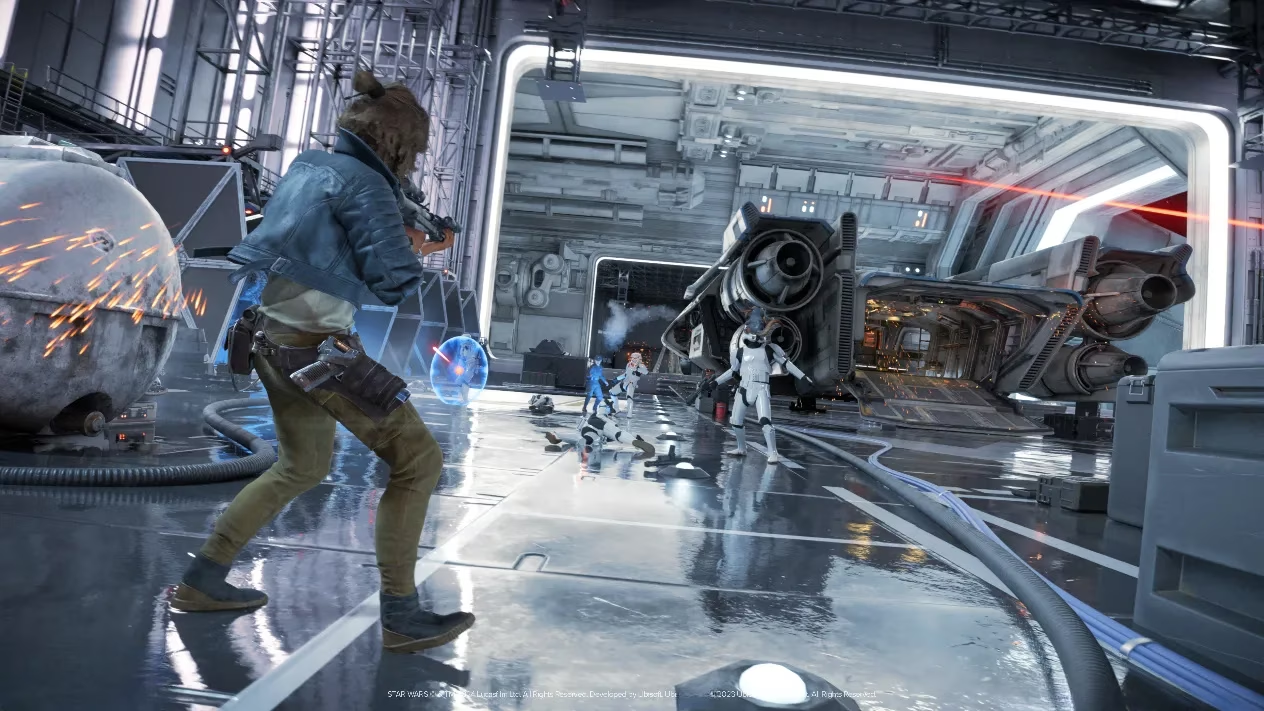
Combat hits a sweet spot between power fantasy and simplicity, but it’s thinly stretched. Most encounters devolve into blaster-and-punch routines that rarely challenge you to experiment. Stealth is generous, almost forgiving to a fault. I still savored every imperial base infiltration, especially one sprawling outpost where I spent an hour rerouting power conduits, climbing reactor scaffolds, and avoiding patrols. The feeling of cracking a facility without raising an alarm is exquisite, but I wished for more mechanical complexity to match the stellar environmental storytelling.
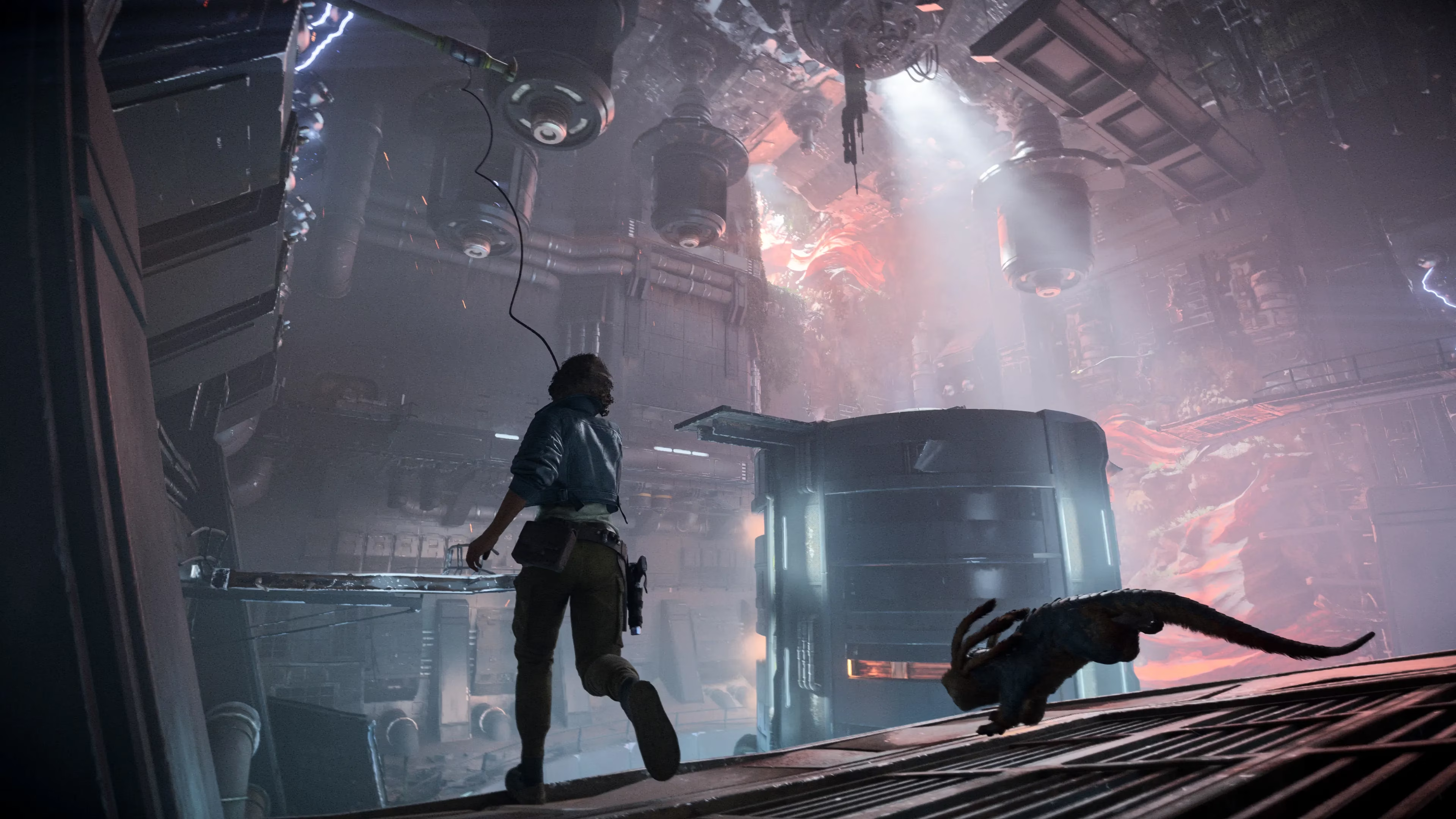
The upgrade loop, however, feels refreshingly organic. Instead of skill trees, you unlock abilities by completing tasks related to the open world—like landing a number of punches or surviving falls. It coaxed me into engaging with systems I might have ignored. Finding a master to teach Kay a new technique often required building trust with a syndicate, tying progression to the reputation game. It’s a small touch, but it makes you feel like a true outlaw defining your own path.
By 2026, Star Wars Outlaws remains a flawed kyber crystal: uncut, flickering with untamed potential. Its technical polish still wobbles—textures pop, AI pathing occasionally breaks—but the core experience has endured. The soaring highs of walking into a syndicate stronghold like you belong, or sharing a quiet moment with Nix under a binary sunset, overshadow the narrative fumbles. I return to it not for the heist, but for the stories I create in the margins. That’s a magic few games in this galaxy manage.